A gravel driveway can be the most practical surface on a property. It drains, it handles heavy vehicles, and it costs far less to build than concrete or asphalt across a long run. It also fits the way many Richmond area properties are laid out, from extended rural entrances in Hanover and Goochland to short parking pads in Henrico. What separates a driveway that still drives well after a decade from one that turns rutted after two winters is almost never the stone itself. It is the preparation underneath, and that is where the installation crew makes the difference.
Why Gravel Holds Up Well on Richmond Properties
Gravel has a reputation as the budget option, but it earns its place on merit. Unlike concrete or asphalt, a gravel driveway is easy to install, simple to repair, and straightforward to maintain. When a pothole appears, it gets filled and graded. There is no patching compound, no cracking, and no resurfacing bill down the road.
That flexibility matters on longer driveways. Pouring concrete across a few hundred feet gets expensive quickly, which is why so many properties west and north of Richmond rely on graded gravel instead. The material also suits the region’s heavy clay soils, because gravel is forgiving of the movement and settling that clay causes. Graded properly, it sheds water instead of holding it, which is the single biggest factor in how long the surface lasts.
What a Proper Gravel Driveway Installation Involves
Gravel installation is excavation and drainage work that happens to finish with stone on top. Skipping or rushing any of these stages is what produces the washouts and ruts homeowners complain about later.
Site Evaluation and Layout
Before anything gets moved, the installer walks the property to read the slope, the soil, and the existing water flow. This step answers practical questions. Where does stormwater currently go? Does it cross the driveway path? Is there enough turning radius for the vehicles that will use it? A layout that ignores drainage will fail no matter how much stone is spread on top, so this is the stage worth slowing down for.
Grading and Drainage
The subgrade gets shaped to a consistent crown so water runs off the sides rather than pooling in the middle. Where the surrounding ground pushes water onto the driveway, the fix is usually a drainage feature installed alongside the work, such as a French drain, a swale, or a culvert. This is also when soft spots and organic material get removed. Topsoil left in place under gravel will compress and shift, so it has to come out.
Base Layer and Compaction
A proper driveway is built in layers, not dumped in one pass. Larger crushed stone goes down first as a structural base, then gets compacted in lifts with the right equipment. Compaction is the step that most often gets shortchanged, and it is the reason two driveways using identical stone can perform completely differently. Each lift should be graded and packed before the next one goes on.
Surface Gravel and Finishing
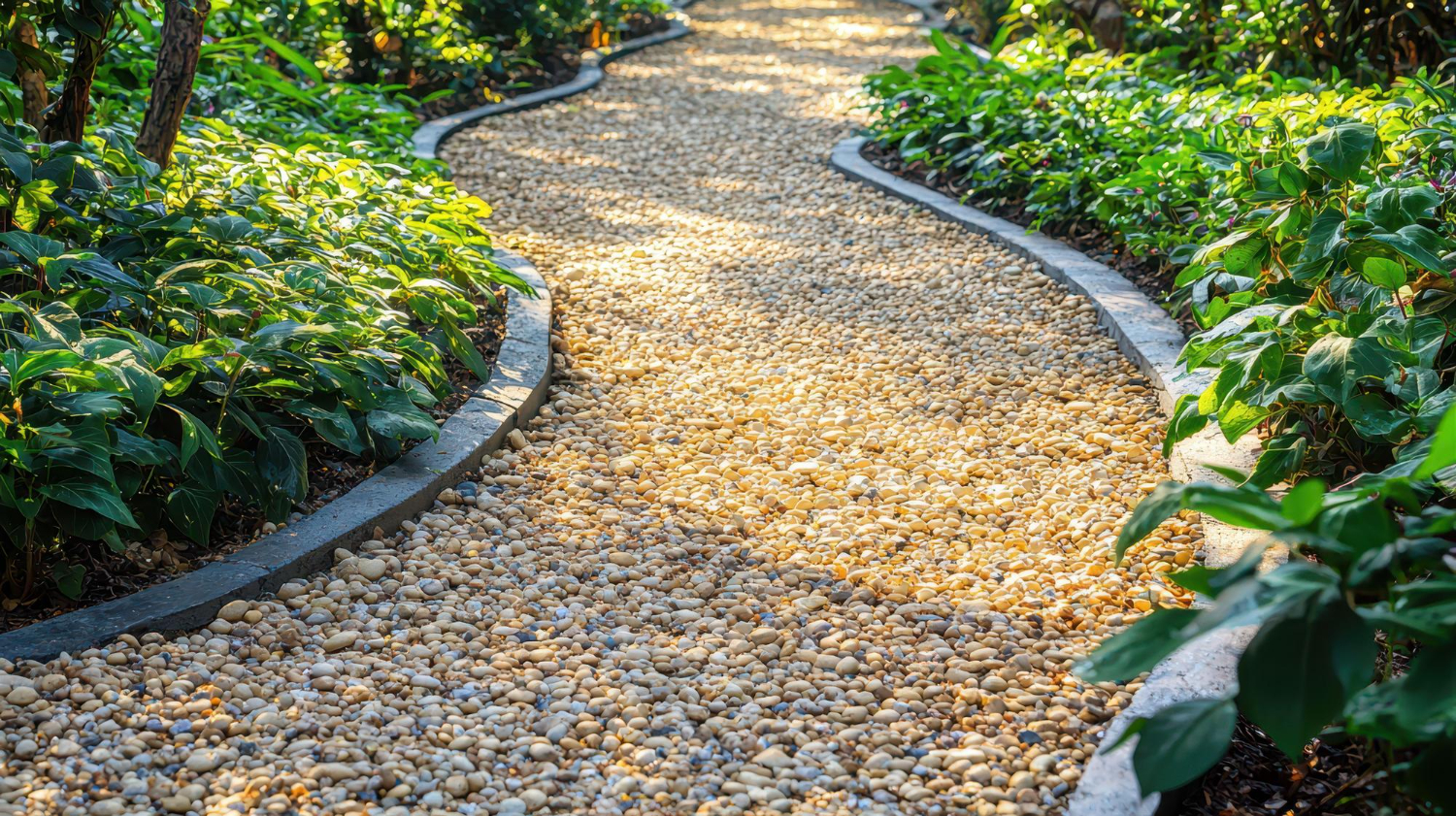
The top layer is the smaller, finer crushed stone that vehicles actually roll on. Installers spread it to a consistent depth, grade it smooth, and compact it a final time. Clean edges, a defined crown, and a tidy transition at the road or apron are the details that separate a finished job from a pile of rock.
What Drives the Cost of Gravel Driveway Installation in Richmond VA
Gravel driveway pricing is quoted per project, not pulled from a flat rate table, because the variables change dramatically from one property to the next. National cost guides publish broad averages, but the useful number for your address comes from an on-site estimate. These are the factors that move the price up or down.
| Cost Factor | Why It Changes the Price |
|---|---|
| Length and width | More square footage means more base stone, more surface stone, and more machine time. |
| Site access | Tight gates, steep grades, and narrow entries slow equipment and may require smaller machines. |
| Base depth required | Soft or clay-heavy ground needs a thicker structural base than firm, well-drained soil. |
| Drainage corrections | Added culverts, swales, or French drains are separate work from spreading gravel. |
| Gravel type and volume | Stone selection and how many tons the job needs directly affect material and delivery charges. |
| Existing surface | Regrading an old driveway is a different scope than building one from bare ground. |
Size and Shape of the Driveway
A straight run is the cheapest shape to build because equipment can work efficiently from one end to the other. Curves, widening at the parking area, turnarounds, and long narrow sections all add handling time. Length matters twice over, since it increases both the tonnage of stone and the hours of grading and compaction.
Site Access and Existing Conditions
If a dump truck cannot back close to the work area, stone has to be moved twice, and that labor shows up in the quote. Properties with steep approaches, mature trees close to the path, or underground utilities in the way also take longer to prepare. Clearing and root removal often have to be priced into the job before any gravel arrives.
Base Depth and Drainage Corrections
This is the line item homeowners most often want to trim, and it is the one that determines whether the driveway survives. A site that sits in a low spot or collects runoff from neighboring ground needs drainage work, not just more stone. Adding gravel over a wet base simply buries the problem until the first heavy rain exposes it.
Gravel Type and Delivered Volume
Driveway stone is sold by the ton, and delivery charges apply. Because gravel and stone suppliers around Richmond deliver throughout the metro and into Williamsburg and Central Virginia, material is easy to source, but the volume required is a calculation based on area and depth, not a guess. A quote that does not show tonnage or depth is hard to compare against another one.
How to Compare Gravel Driveway Quotes
The lowest bid is only the lowest bid if both quotes describe the same work. Ask every contractor for the same level of detail so you can line them up side by side.
- Whether the quote includes removal of topsoil and organic material
- The specified base depth and the type of base stone
- The type and depth of the surface gravel
- Whether drainage features are included or priced separately
- How compaction is handled and with what equipment
- Whether grading, cleanup, and restoration of disturbed areas are covered
- Whether the contractor is licensed and insured
If one number is dramatically lower than the rest, the difference is usually base depth, compaction, or drainage, and you will pay for that gap later.
Keeping a Gravel Driveway in Good Shape
Gravel is not maintenance free, but the upkeep is simple and inexpensive compared with replacing a cracked slab. Light work done on schedule prevents heavy work later.
- Fill potholes and low spots before they widen
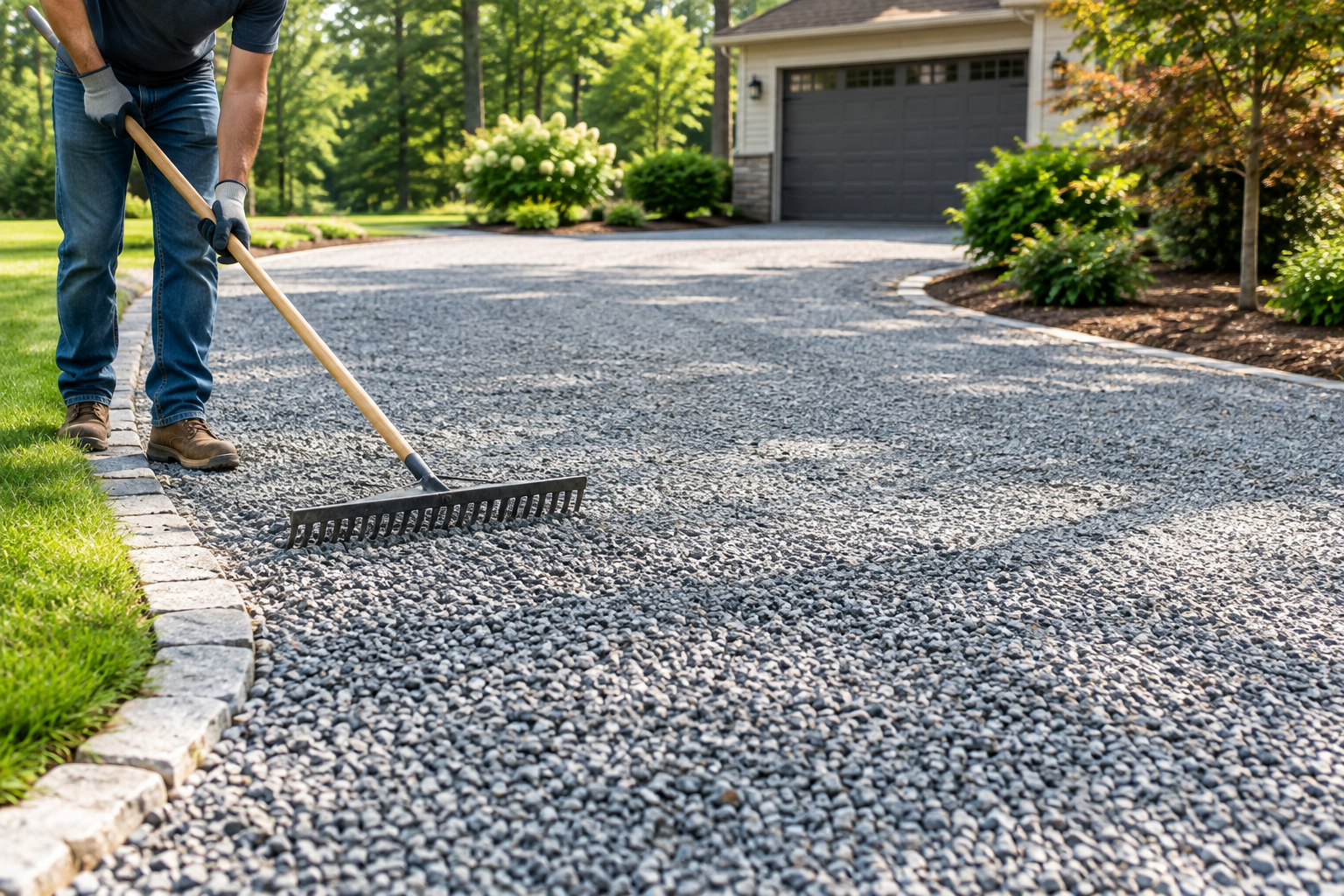
- Rake or grade the surface periodically to restore the crown
- Keep the edges built up so water does not migrate under the stone
- Control weeds along the edges rather than letting roots break up the surface
- Address drainage problems at the source instead of adding more stone
Homeowners with existing driveways that just need pothole filling or fresh grading can often have that handled without a full rebuild.
Choosing a Contractor in the Richmond Area
Gravel driveway work is available across Richmond, Henrico, Chesterfield, Goochland, Powhatan, Hanover, and the surrounding counties, which means you have options. Use that. Ask for a walkthrough rather than a phone estimate, since nobody can price base depth without seeing the ground. Confirm licensing and insurance. Look for a company that also handles drainage and grading, because those problems rarely stay separate from driveway work. A locally based, owner-led crew that answers questions directly and returns for follow-up issues is worth paying a little more for.
Frequently Asked Questions
How much does gravel driveway installation cost in Richmond VA?
Most contractors quote per project rather than publishing a flat rate, so pricing depends on your driveway’s length, width, base depth, drainage needs, and stone selection. National cost guides offer broad averages, but they cannot account for your site conditions. The reliable way to budget is a free on-site estimate that itemizes stone, labor, and any drainage work separately.
Can you just put gravel down over an existing driveway?
Sometimes, but only if the base underneath is still firm and draining properly. Spreading new stone over a soft, rutted, or waterlogged surface simply hides the problem and the ruts return after the next heavy rain. A contractor should inspect the existing drive, regrade what is usable, and correct drainage before adding material.
Do I need a permit for a gravel driveway in Richmond VA?
Requirements vary by locality and can depend on where the driveway meets the road, how the property is zoned, and whether drainage patterns change. Because those rules differ between Richmond City and the surrounding counties, confirm the current requirements with your local planning or zoning office before work begins, and ask your contractor what they typically see in your area.
How long does gravel driveway installation take?
Timeline depends on driveway length, how much excavation and drainage work is needed, and weather. A short, straightforward driveway on prepared ground moves quickly, while a long run with clearing, grading, and drainage corrections takes considerably longer. Your contractor should give you a realistic schedule with the estimate rather than a same-day promise.
How do I stop weeds and potholes in a gravel driveway?
Both usually trace back to the same two issues: a base that was not compacted properly and water that is not draining away from the surface. Fixing drainage and maintaining the crown does more than any surface treatment. Fill potholes as soon as they appear, keep edges built up, and have the driveway regraded periodically to keep it shedding water.
Conclusion
A gravel driveway can be a practical, durable addition to your Richmond property when the base, grading, drainage, and compaction are handled correctly. The right installation approach helps prevent ruts, potholes, washouts, and repeated repairs. If you’re planning a new driveway or replacing an existing one, Altizer Lawn & Landscape can assess your site and recommend the right preparation and gravel solution. Contact Altizer Lawn & Landscape today to schedule your estimate and start planning a driveway built to last.