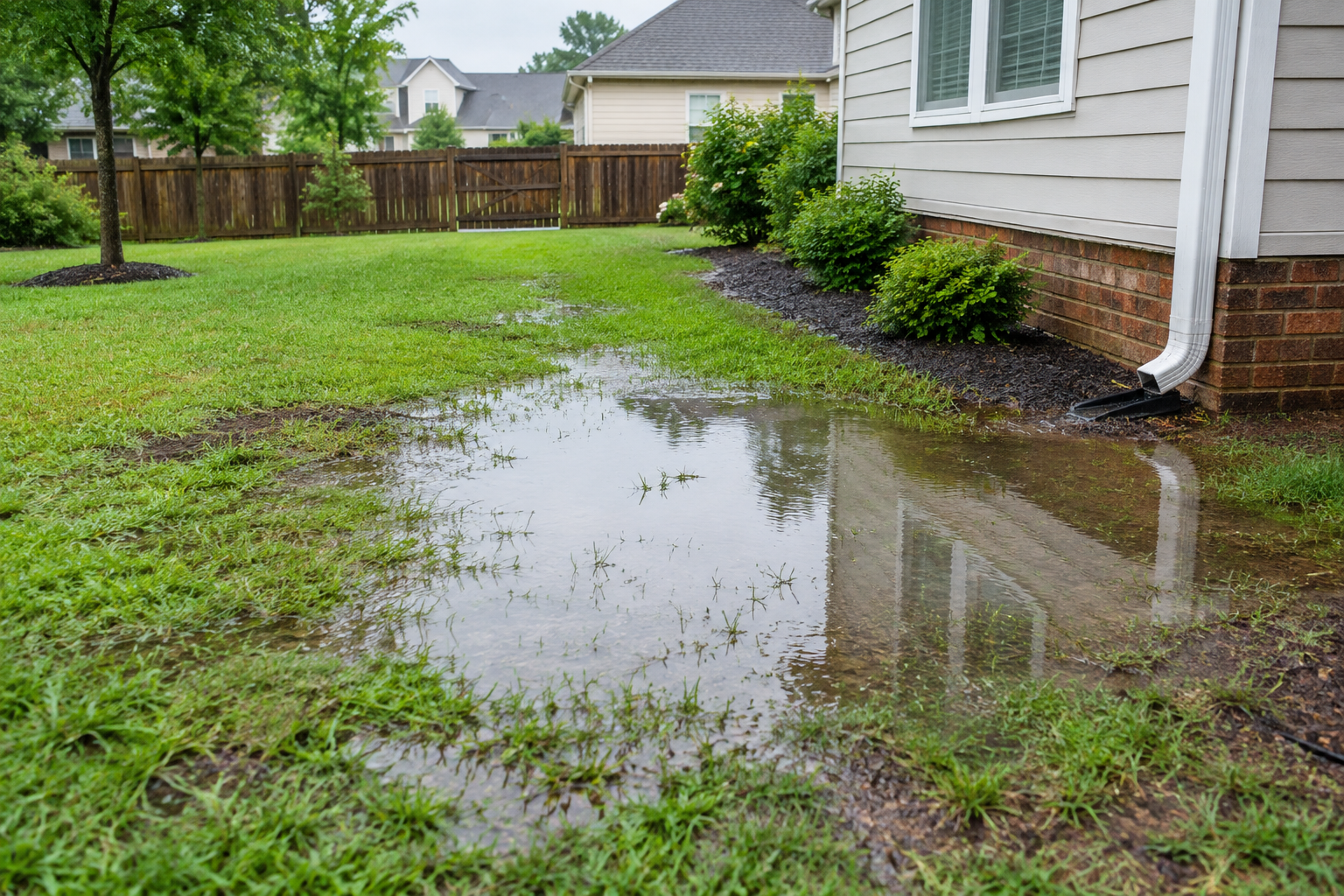
Richmond homeowners know that heavy rain can leave lasting marks on a yard. A storm rolls through, and hours later there is still a pond in the low corner of the lawn, a muddy strip along the foundation, and a slope that seems to lose a little more soil every season. Those things are not just cosmetic annoyances. Puddles that sit for days, muddy patches near the foundation, and eroded slopes are all signs that water is not moving where it should.
The tricky part is that drainage problems rarely announce themselves all at once. They build slowly, one wet season at a time, until the lawn that used to bounce back starts staying soggy and the mulch keeps washing into the street. This guide walks through the warning signs Richmond area homeowners should watch for, why local soil makes them so common, and what kinds of fixes actually address the problem.
Why Water Sits on So Many Richmond Area Lawns
Soil is the first thing to understand. Richmond is a bit of a toss-up when it comes to soil conditions, but it tends to be more clayey in the top six feet. Clay particles are tiny and pack tightly together, which means water moves through them slowly. Once that soil is compacted by foot traffic, mowers, vehicles, or construction equipment, it can behave almost like a hard surface rather than a sponge.
When rain falls faster than clay soil can absorb it, the excess has to go somewhere. It collects in the lowest spot, follows the path of least resistance across the yard, and often ends up sitting against the side of the house. Yards in Richmond, Henrico, Hanover, Mechanicsville, and the surrounding communities deal with the same basic physics: too much water, moving too slowly, in the wrong direction.
The Warning Signs Worth Taking Seriously
Most drainage problems show up first as small changes in how the yard behaves after rain. Individually, each sign seems minor. Together, they tell a fairly clear story about where water is going.
Standing Water That Lingers After the Storm
Large puddles of pooling or standing water are the most obvious warning sign. The key detail is timing. A puddle that disappears an hour after the rain stops is normal. Water that is still sitting there the next morning, or even two days later, is not. Persistent standing water after rain is one of the clearest indicators that the ground beneath it has stopped accepting water at a useful rate.
Soggy, Spongy Spots in the Lawn
Excessively soggy spots are easy to miss until you walk through them. If the turf feels spongy underfoot, or if your shoes sink in and leave deep prints days after the last storm, that area is holding water. These soft patches tend to spread over time as the soil structure breaks down from repeated saturation. They also tend to reappear in the same place every year, usually a little larger than before.
Muddy Ground Along the Foundation
Muddy patches near the foundation are worth paying close attention to. This is the area where drainage problems have the most potential to affect your home and property, not just your grass. Ground that stays wet against the base of the house keeps a steady band of moisture in place, and water sitting there has nowhere to go but down or sideways. A dry strip a foot or two wide along the foundation is what you want to see.
Discolored or Overgrown Patches of Grass
Turf reacts to saturated soil in a couple of different ways. Some areas yellow, thin out, and die back because roots cannot get the oxygen they need. Other spots do the opposite, growing taller and greener than the rest of the lawn because they get extra moisture. Both are warning signs of improper drainage. Moss, sedges, and water-loving weeds showing up in the same area season after season point to the same conclusion.
Eroded Slopes, Washed-Out Mulch, and Bare Soil
Eroded slopes are the sign homeowners tend to notice last, because the damage happens during storms rather than between them. Look for small channels cut into the soil, bare patches where grass has washed away, exposed tree roots, and mulch or gravel that keeps collecting at the bottom of a hill. When you see stone or mulch piled up at the low end of a bed after every heavy rain, water is moving faster than the slope can handle.
A Simple Walkthrough to Do After the Next Rain
You do not need any special tools to get a rough read on your yard. Wait a few hours after a solid rain, put on boots, and walk the property with these questions in mind:
- Where is water still standing, and how deep is it?
- Which direction is water flowing, and does it head toward or away from the house?
- Are there soft, spongy spots that your feet sink into?
- Is the ground along the foundation damp while the rest of the yard has dried?
- Are there new channels, bare patches, or piles of washed-out material?
- Have the same wet spots come back in the same places for more than one season?
Taking phone photos from the same spots each time makes it much easier to see whether a problem is stable or getting worse. It also gives a contractor something concrete to work with during an estimate.
What Poor Drainage Can Affect Beyond the Lawn
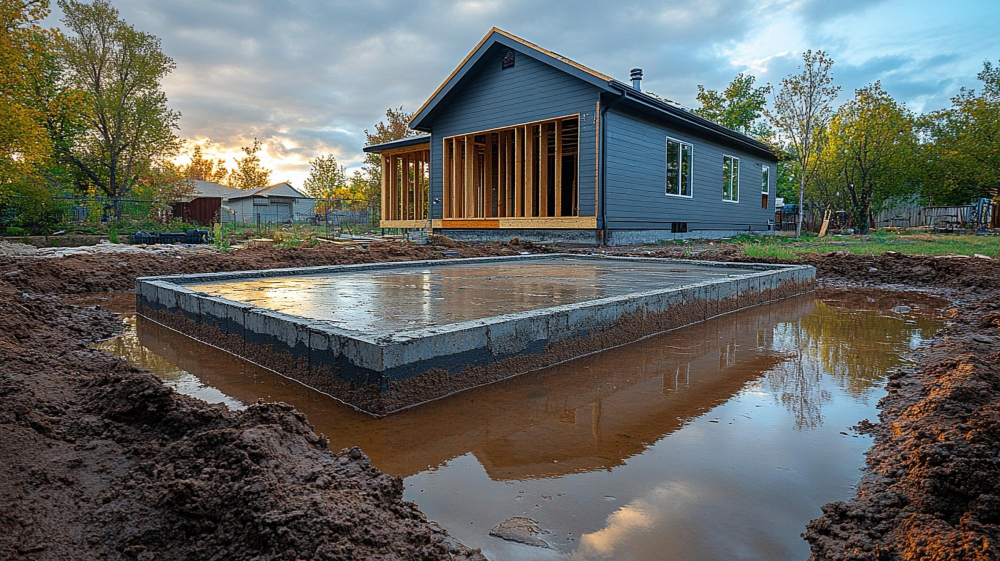
Standing water and other drainage issues in a yard can lead to home and property damage, which is why the issue is usually framed as surface and foundation drainage rather than just lawn care. Saturated ground puts constant pressure on foundations, walkways, patios, and retaining walls. It softens the soil that supports hardscape features. It also makes driveways and gravel surfaces more prone to ruts and washouts over time.
Because the work overlaps with several trades, it helps to know who you are calling. A directory of drainage contractors in the Richmond area includes drain cleaning and plumbing companies as well as landscapers and excavation crews. Ask any company you contact what part of the work they handle in-house and what they subcontract.
Drainage Solutions That Fit a Residential Yard
There is no single fix that works for every lot, which is why an on-site look matters. That said, the tools available to a residential drainage contractor generally fall into a few categories:
- French drains, which collect and redirect subsurface water
- Channel drains, which capture surface water along driveways, patios, and walkways
- Grading and regrading, which reshape the surface so water flows away from structures
- Erosion control, which stabilizes slopes and bare soil
- Surface and foundation drainage systems, which handle the water that collects closest to the house
- Downspout and gutter adjustments, which keep roof runoff from dumping next to the foundation
The right combination depends on where the water comes from, where it currently goes, and where it can safely be sent. A yard with one soggy corner needs a very different approach than a sloped lot with water running toward the foundation and washing out the beds along the way.
When to Bring in a Licensed Drainage Contractor
Homeowners can handle small adjustments on their own, such as extending a downspout or raking out a shallow swale. It is time to call a professional when water sits for days, when the same spots flood every year, when the ground near the foundation stays wet, or when erosion is cutting into a slope faster than grass can recover.
Altizer Landscape works with homeowners across Richmond, Mechanicsville, Hanover, Henrico, and Richmond City on lawn care, hardscaping, drainage solutions, and outdoor construction. The company is family-owned, licensed, and insured, and offers free estimates with owner-led service, so you can get a straightforward read on what your yard actually needs.
Frequently Asked Questions
How do I know if my yard has a drainage problem?
Watch your yard after a heavy rain. Standing water that lingers for days, spongy spots that stay soft long after the storm, muddy ground along the foundation, discolored or unusually overgrown grass patches, and eroded slopes are all signs that water is not moving the way it should. If the same spots fail to dry out season after season, that pattern is the strongest signal of all.
What makes drainage problems so common in Richmond?
Soil is a big part of it. Richmond soil tends to be more clayey in the top six feet, and clay drains slowly. Once it is compacted by foot traffic, mowers, or equipment, it can shed water almost like pavement. Combined with heavy rain, that means water pools in low spots and runs toward the nearest structure instead of soaking in.
What is a French drain, and how does it help?
A French drain is a buried gravel and pipe system that collects water below the surface and carries it to a better release point. It is one of the most common solutions for yards with persistently soggy areas, and it is often paired with grading, channel drains, or surface and foundation drainage work depending on where the water originates and where it needs to go.
When should I call a drainage contractor instead of fixing it myself?
Simple fixes like extending a downspout or clearing a swale are reasonable do-it-yourself projects. Call a professional when water sits for days, when the same areas flood every year, when the ground next to your foundation stays wet, or when erosion is cutting channels into a slope. Those situations usually need diagnosis rather than another bag of topsoil and grass seed.
Can better drainage actually improve my lawn?
Yes. Turf roots need oxygen as well as water, and soil that stays saturated starves them. Fixing drainage helps yellowed and thinning patches recover, reduces moss and water-loving weeds, and makes it easier to keep grass established on slopes that currently wash out. It also limits the ongoing damage that standing water can cause to hardscape surfaces and structures.
Conclusion
Good drainage protects more than your lawn. If your Richmond yard stays soggy after rain, develops muddy areas near the foundation, or shows signs of erosion, the problem is worth addressing before it causes more damage. The right drainage solution starts with finding where the water comes from and where it needs to go. If you are dealing with recurring drainage issues, Altizer Lawn & Landscape can assess your yard and recommend a practical solution for your property. Contact Altizer Lawn & Landscape today to schedule an assessment and take the first step toward a healthier, better-drained yard.