
A low spot in the lawn looks like a small problem until the next heavy rain. Water collects there, grass thins out, and the spot turns to mud that stays soft for days. Around Richmond and the surrounding counties, homeowners deal with this constantly, and the right fix depends entirely on why the water is sitting there in the first place. Sometimes a shallow depression only needs soil. Other times the water has nowhere else to go, and a quick surface patch will fail within a season.
This guide covers how to tell the difference, which drainage methods actually solve persistent low spots, and how to keep standing water away from your foundation before it causes real damage.
Why Low Spots Matter More Than They Look
A depression in the yard is rarely just a cosmetic issue. When water pools in the same place after every storm, the soil underneath stays saturated long after the rest of the lawn has dried out. That constant moisture creates a chain of problems that spreads well beyond the low spot itself.
Excessive moisture in a landscape commonly leads to loss of plant material and turf, disease and insect problems, damage and rutting from mowing equipment, and compacted soil. Each of those makes the next problem worse. Bare soil compacts faster, compacted soil drains slower, and slow drainage keeps the spot wet longer.
The damage is not always limited to the yard. Too much moisture around a home can lead to mold and mildew in the crawlspace and to foundation settling. Water that pools against the foundation is the version of this problem worth taking seriously early, because foundation repairs cost far more than drainage work.
Signs Your Yard Has a Drainage Problem
Homeowners in Richmond, Henrico, Mechanicsville, and Hanover often describe the same handful of symptoms. Any combination of these points to a drainage issue rather than a simple lawn care problem:
- Standing water or puddles in the landscape or lawn after rain
- Soggy patches that never fully dry out
- Mud where grass used to grow
- Water pooling against the foundation
- Ruts left behind by mowing equipment
- Compacted soil that sheds water instead of absorbing it
- Mold or mildew in the crawlspace
- Signs of foundation settling
If only one small area stays soft for a day and then recovers, you may be dealing with a minor depression. If water sits for days, spreads, or shows up near the house, the underlying drainage needs attention.
Diagnose the Low Spot Before You Fix It
The most useful thing you can do is watch your yard during and right after a storm. Walk the property and note where water first appears, which direction it flows, and where it finally stops. That single observation usually tells you whether the low spot is the source of the problem or just the place where water from somewhere else ends up.
Pay attention to how water arrives. Runoff from a neighboring slope, a downspout that dumps close to the house, or a driveway that sheds toward the lawn can all feed a low spot that would otherwise stay dry. If the water is coming from uphill, filling the depression with soil only moves the puddle a few feet.
Also note how deep and how wide the depression is. A shallow, saucer-shaped dip that holds a thin layer of water behaves very differently from a bowl that collects several inches. Shallow surface pooling and a true drainage failure call for different solutions, and treating one as the other wastes both time and money.
When Adding Topsoil Is Enough
Topsoil can genuinely help when the problem is minor surface pooling caused by low spots or depressions. If the dip is shallow, the surrounding grade is otherwise sound, and water drains away within a day, filling and blending that area can restore a level surface.
What topsoil will not do is resolve a deeper drainage problem. If the water has nowhere to go once it arrives, raising the surface just creates a new low point somewhere nearby. The puddle returns, often within a few good storms.
If you do add soil, work it into the existing ground rather than laying a fresh layer on top. Loose soil spread over an uneven surface tends to settle and reappear as a dip again. Matching the surrounding grade and compacting lightly gives you a surface that holds up.
Drainage Solutions That Solve Persistent Low Spots
When soil alone will not fix the problem, the answer is usually one of several established drainage methods. Which one fits depends on whether you are managing surface water, groundwater, or both.
Regrading the Yard
Regrading reshapes the surface so water flows away from the house and off the low area instead of collecting in it. It is often the first step because it corrects the slope itself. Grading work pairs well with the other methods below, since a drain can only move water as well as the surface allows.
French Drains
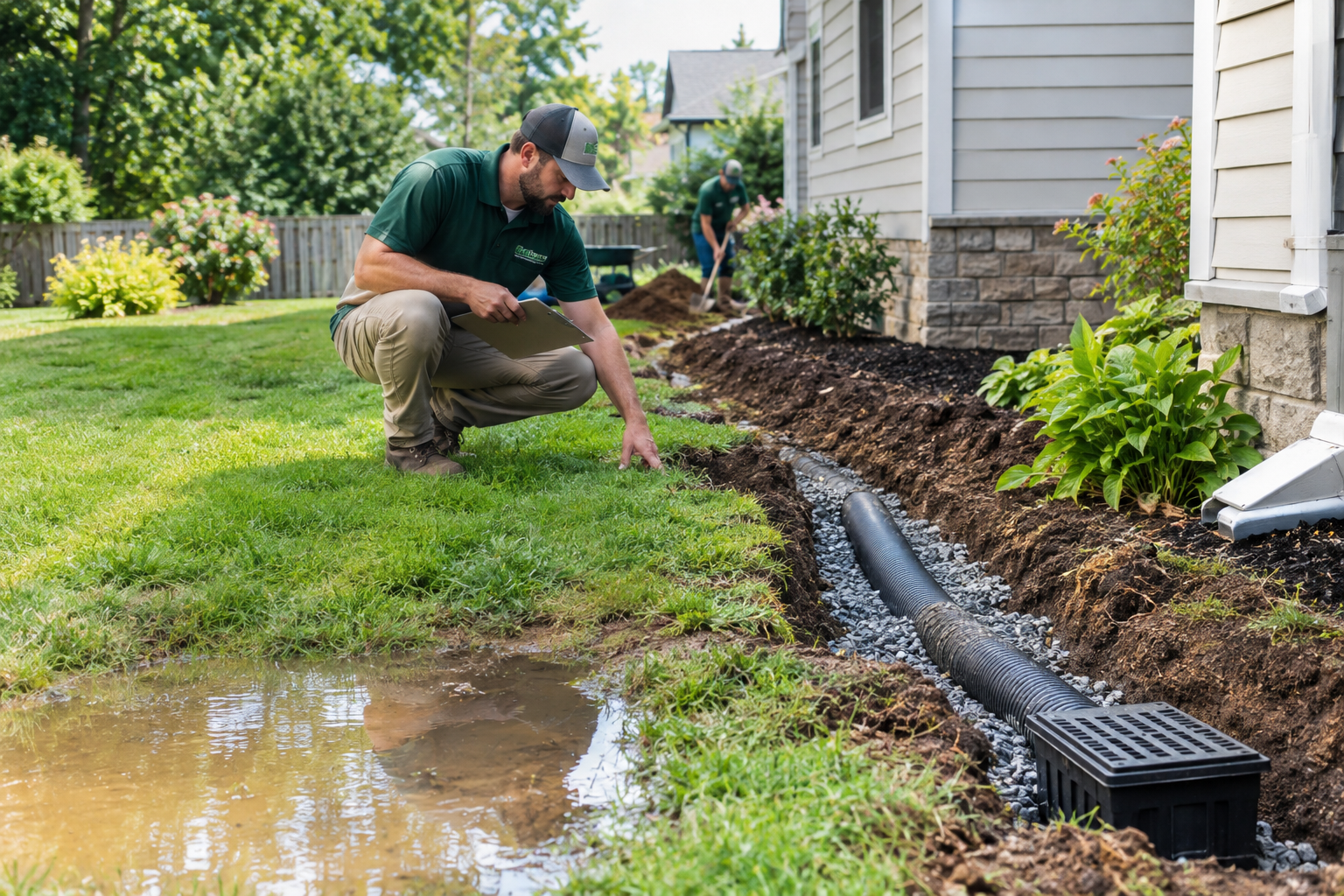
A French drain collects water below the surface and carries it to a better discharge point. It is a common choice for yards that stay soggy long after the rain stops, where the issue is saturated ground rather than a visible puddle. Contractors across the Richmond area install French drains as a standard part of yard drainage work.
Catch Basins and Channel Drains
Catch basins and channel drains target surface water. A catch basin sits at the low point and captures water before it spreads, while a channel drain collects along a line, such as the edge of a patio, driveway, or walkway. Both are useful when a specific spot reliably floods.
Dry Wells
A dry well gives collected water a place to go when there is no obvious outlet nearby. Water is directed into the well and allowed to disperse into the ground rather than running across the lawn or toward the house. Dry wells are frequently installed alongside French drains and catch basins as part of a complete system.
Plants Can Help Dry Out a Soggy Spot
Planting is not a replacement for drainage work, but it can be a smart addition. A soggy spot can be improved by replanting with water-tolerant plants. Those plants soak up remaining moisture and improve the appearance of an area that has already proven difficult to keep in turf.
This approach works best after the main water problem is under control. Plants can handle a damp area, but they will not survive a spot that floods and stays flooded. Think of planting as the finishing layer on top of a drainage fix, not the fix itself.
Protecting Your Foundation and the Rest of the Yard
The direction water travels matters as much as the volume. Water that pools against the foundation is one of the most common calls drainage contractors receive in the Richmond area, and it is the symptom with the highest stakes. Moisture against a foundation can contribute to crawlspace mold and mildew and to settling over time.
Once water is redirected away from the house, the rest of the yard tends to recover on its own. Turf returns where the soil can finally dry out, mowing equipment stops cutting ruts, and compacted ground starts to loosen. Fixing the drainage addresses several problems at once.
Working With a Richmond Drainage Contractor
Some low spots are a weekend project with a few yards of topsoil. Others need equipment, a plan for where the water will discharge, and someone who can read the slope of a property accurately. If water sits for days, returns in the same place, or pools anywhere near your foundation, it is worth having the yard evaluated.
A local drainage contractor can identify where the water is going and give it somewhere better to go, rather than treating the puddle itself. Altizer Landscape provides drainage solutions, grading, and erosion control for residential properties throughout Richmond, Mechanicsville, Hanover, Henrico, and Richmond City. The company is family owned, licensed, and insured, with owner-led service and free estimates.
Frequently Asked Questions
Can I fix a low spot in my yard by just adding topsoil?
Sometimes. Adding topsoil can help when the problem is minor surface pooling caused by a low spot or depression. It will not resolve a deeper drainage issue, because the water still has nowhere to go once it arrives. If the spot floods repeatedly or stays wet for days, the fix needs to address drainage rather than surface level.
How do I know if I need a French drain or just regrading?
Watch your yard during a storm. If water flows across the surface and collects in a dip, regrading may be enough to send it elsewhere. If the ground itself stays soggy long after the rain stops, the issue is below the surface and a French drain is the more likely answer. Many yards need both.
What are the signs of poor yard drainage?
Common signs include standing water or puddles in the lawn, soggy patches that never dry out, mud where grass used to grow, and water pooling against the foundation. Excessive moisture can also lead to turf and plant loss, disease and insect problems, ruts from mowing equipment, compacted soil, crawlspace mold, and foundation settling.
Will a low spot in my yard damage my foundation?
It can if the water pools against the house. Excessive moisture around a home is linked to mold and mildew in the crawlspace and to foundation settling. A low spot in the middle of the lawn is mostly a turf problem. A low spot near the foundation is worth addressing quickly.
Can planting help a wet spot in the yard?
Yes, as a supplement to drainage work. Replanting a soggy area with water-tolerant plants can soak up remaining moisture and improve how the spot looks. Plants cannot handle standing water that never drains, so correct the underlying water problem first, then plant as a finishing step.
Fix Low Spots Before They Become Bigger Problems
A low spot that holds water after every storm is more than a lawn issue. Whether you need regrading, a French drain, a catch basin, or another drainage solution depends on where the water comes from and where it needs to go. If your Richmond-area yard stays soggy, develops repeated puddles, or has water collecting near the foundation, professional drainage work can help protect your landscape and home. Contact Altizer Landscape today to have your yard evaluated and find the right drainage solution for your property.