A walkway does quiet work around a home. It carries guests from the driveway to the front door, keeps feet out of the mud after a Virginia rain, and ties the separate parts of a yard together. Homeowners in Richmond, Henrico, Hanover, Mechanicsville, and Chesterfield ask about walkways for all kinds of reasons, and the right answer is rarely the same twice. Material, layout, and drainage all depend on the house, the slope, and how the space actually gets used.
What follows is a practical look at the walkway materials that make sense on central Virginia properties, the design approaches that work well here, and what happens during installation.
Why a Walkway Changes How a Richmond Yard Works
A walkway is both a route and a design element. Locally installed concrete paths and walkways are built to be functional and visually appealing at the same time, and paver walkways are often described in terms of the charm, structure, and personality they add to a property. That combination is why walkways show up in so many front yard makeovers.
Think about the jobs a path performs. It guides people from one space to another, which matters on an unsigned lawn where guests guess at the best route. It protects turf from the wear of a repeated footpath. It can connect outdoor living spaces so a patio, a fire pit, and a garden bed feel like one intentional yard instead of three separate projects. And it changes the way a home presents itself from the street before anyone reaches the front door.
Walkway Materials Used on Richmond Properties
Most residential walkways in the area fall into four material families. Each has a different look, a different installation process, and a different set of situations where it shines.
Concrete Walkways, Poured and Stamped
Concrete is the familiar option. Local concrete contractors install paths and walkways for Richmond properties in both plain poured finishes and stamped patterns that imitate stone, brick, or tile. Poured concrete gives a clean, uniform surface with straight lines, which suits simple front walks and side routes where the path is meant to disappear into the background.
Stamped concrete takes the same base material and presses a pattern into it while it cures, so a walkway can pick up the texture of stone or pavers without the individual units. The tradeoff is visual: a stamped surface reads as a single continuous slab rather than a collection of pieces.
Paver Walkways
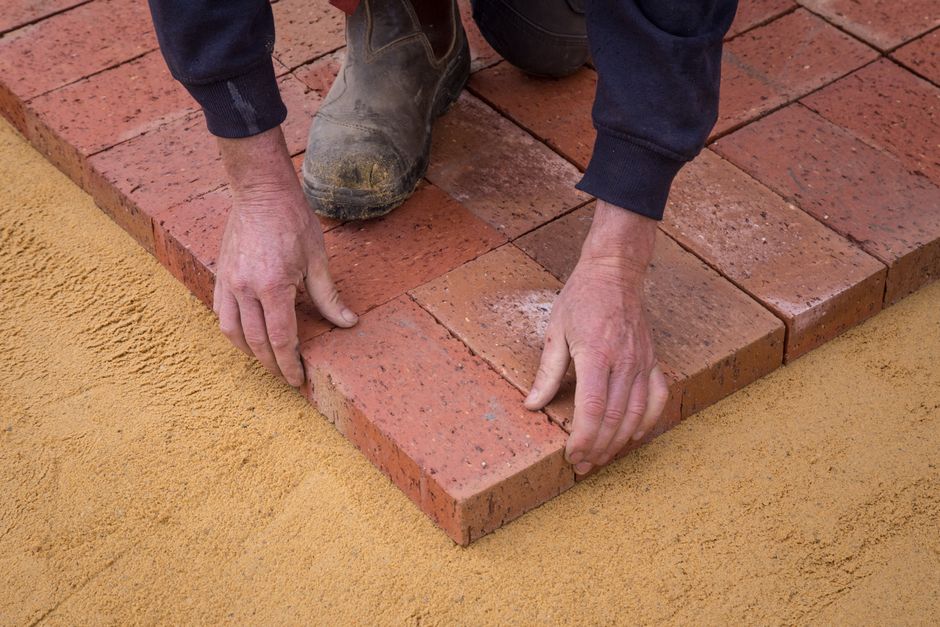
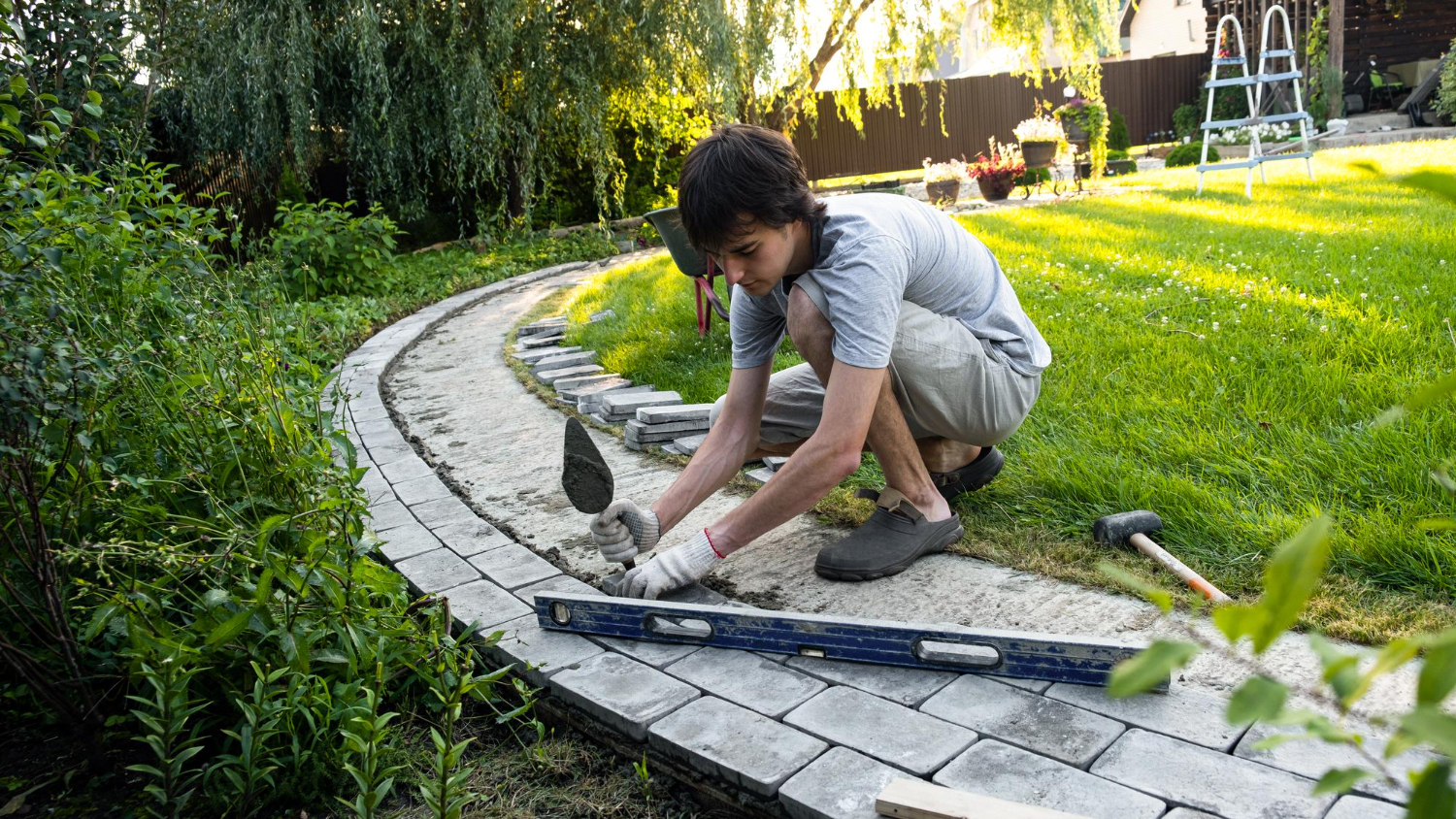
Pavers are modular units laid in a pattern, which opens up design choices that poured concrete cannot match. Because they arrive as individual pieces, they can follow curves, shift direction at a planting bed, or change pattern to mark a transition from a public front walk to a private garden path.
Paver manufacturers offer a wide range of styles, colors, textures, and patterns, giving homeowners flexibility when planning a walkway. Choosing an experienced installer can also help ensure the right materials and installation methods are used for Richmond’s seasonal weather conditions, including freeze and thaw cycles.
Natural Stone Walkways
Natural stone brings an organic, irregular look that manufactured products work hard to imitate. Local masonry and hardscape crews design and install natural patios and walkways that blend into a front entryway and surrounding plantings rather than sitting on top of the landscape. Flagstone and other natural materials pair especially well with mature trees, perennial beds, and homes with brick or stone exteriors.
Gravel and Loose Aggregate Paths
Loose aggregate is the informal option, and it fits garden routes, side yards, and utility paths where a hard surface is not the point. It also works as a transition material between a formal front walk and a working area of the yard. Landscapers who install gravel driveways routinely handle this kind of work, since the grading and base preparation overlap.
Comparing Walkway Materials at a Glance
The table below is a starting point for conversations with a designer or contractor, not a final decision. Site conditions and layout often narrow the list quickly.
| Material | Character | Often used for |
|---|---|---|
| Poured concrete | Smooth, uniform, continuous | Straight front walks, simple side routes |
| Stamped concrete | Patterned surface imitating stone or brick | Walkways that need texture without individual units |
| Pavers | Modular, pattern-driven, can curve | Front entries, garden paths, connections between spaces |
| Natural stone | Irregular, organic, one of a kind | Entryways and naturalistic plantings |
| Gravel or loose aggregate | Informal, soft underfoot | Garden routes, side yards, transitions |
Design Ideas That Fit Richmond Homes
Walkway design is mostly about matching the path to the way the yard is used. A few common approaches translate well to local properties.
Front Entry Walkways
The front walk sets the tone. A straight run of wide pavers or a stamped concrete path reads as formal and directs the eye to the door. A gently curved route suggests a more relaxed property and gives planting beds room to spill toward the path. On homes where the existing walk is cracked or narrow, replacing it is often the single change that does the most for curb appeal.
Garden and Side Yard Paths
Garden paths are allowed to be narrower and less formal. A paver or gravel route that winds between beds, around a specimen tree, or out to a shed and side gate solves a real circulation problem while adding texture to the plantings. Stepping stone layouts work in the same situations where a full-width walk would feel heavy.
Connecting Outdoor Living Spaces
When a yard has a patio, a fire pit area, and a lawn, separate materials can make each zone feel unrelated. A walkway in a consistent material ties them together and keeps guests from crossing the grass. Paver walkways are used frequently for this because the pattern can echo the patio surface and create a continuous line from the back door to the seating area.
Drainage and Grading Come First
In central Virginia, water is the deciding factor in most walkway projects. A path that holds water will heave, settle, or turn into a slick surface after a storm, and a path that sheds water toward the house creates a foundation problem. That is why grading and drainage are settled before any material is chosen.
Local landscapers handle French drains, grading, and erosion control alongside hardscape work, which means a walkway can be designed as part of a broader water management plan rather than in isolation. If a low spot sits along the route, correcting it during installation is far easier than fixing it later. On sloped lots, the path may need to step, curve, or include a drain to manage runoff.
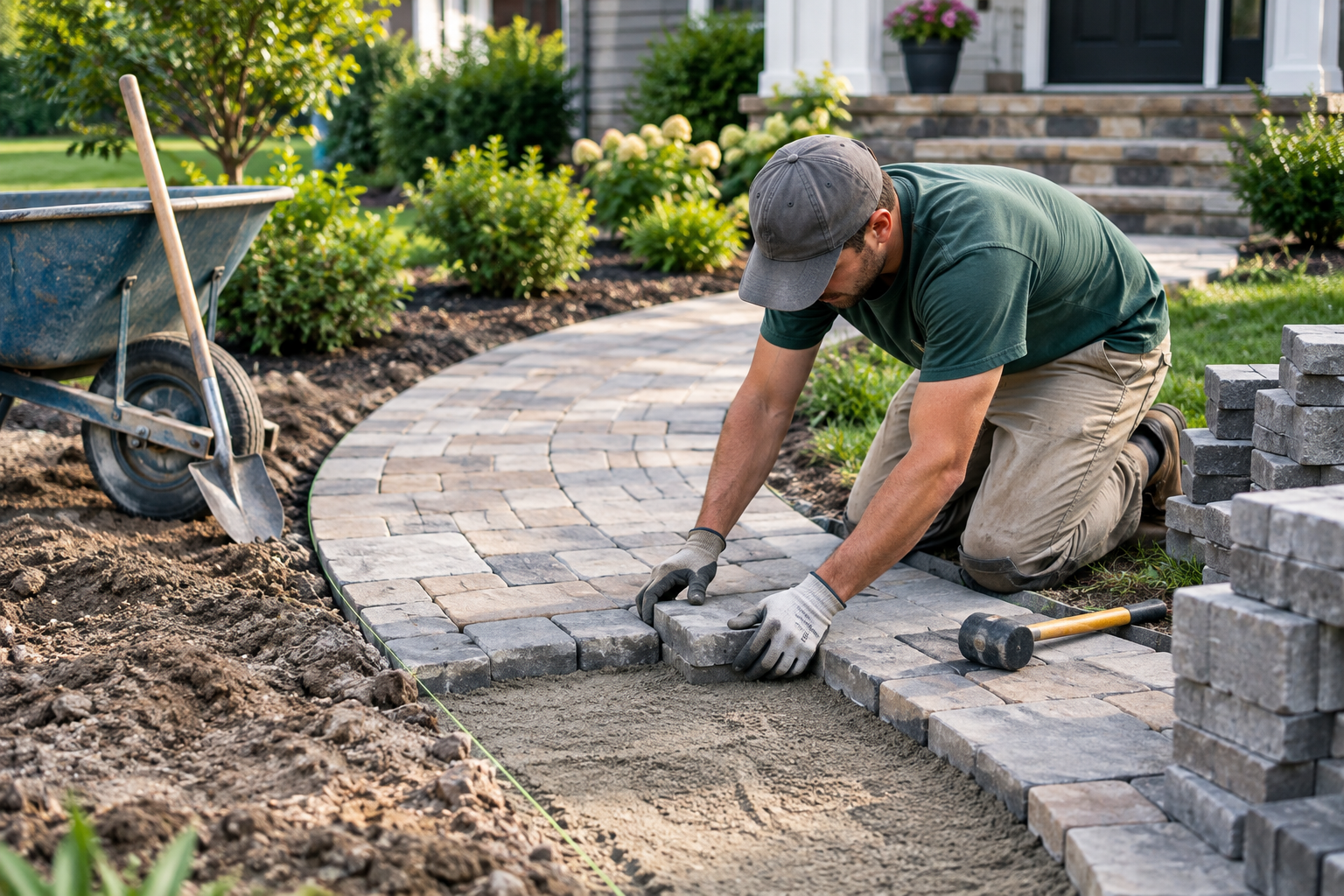
How Walkway Installation Typically Unfolds
Installation follows a predictable sequence, and knowing it helps homeowners ask better questions during a quote.
- Layout and design, where the route is marked and the material and pattern are selected.
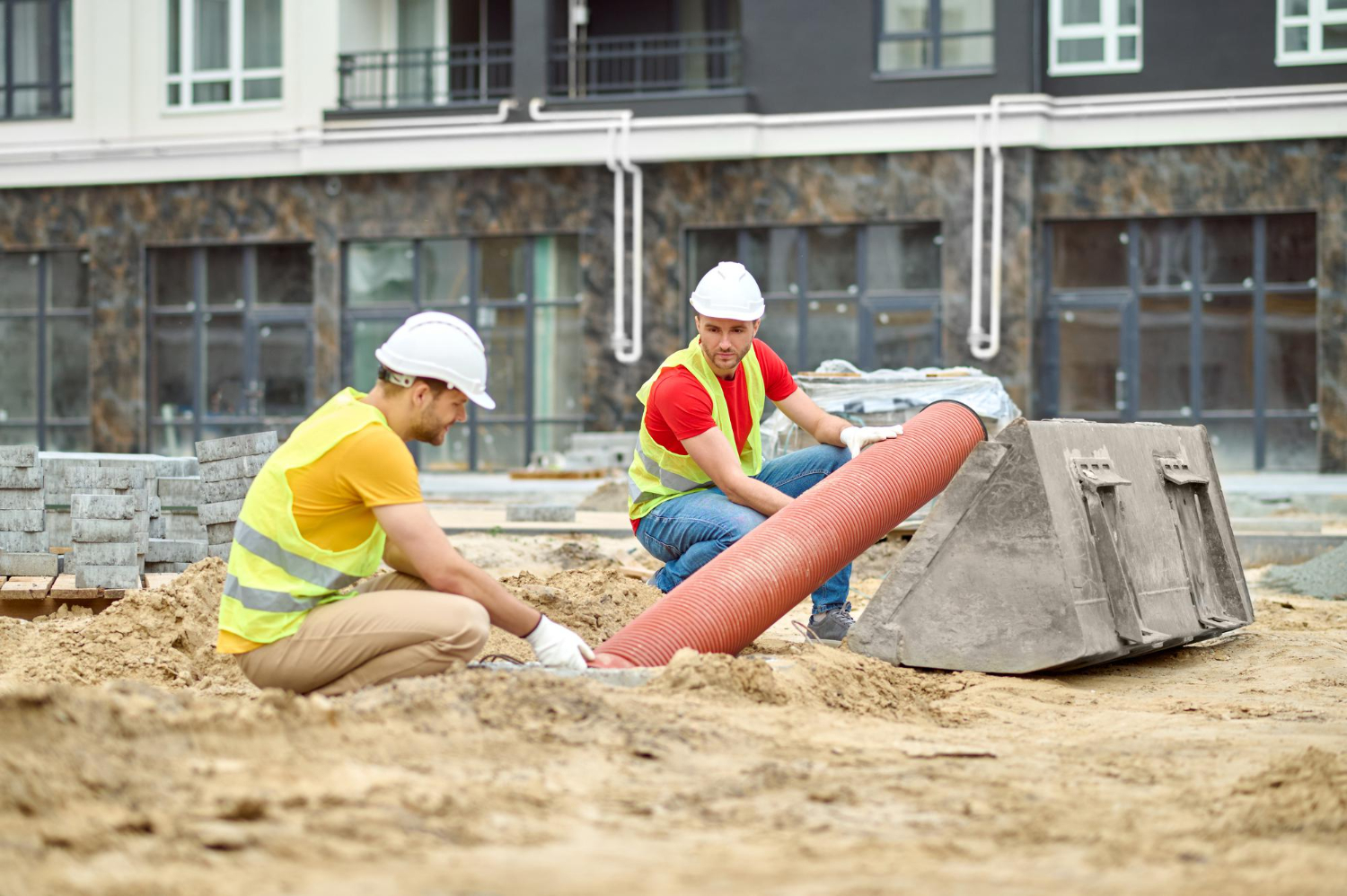
- Excavation, where the existing surface and unsuitable material are removed.
- Grading and base preparation, the step that determines how the finished walk performs.
- Setting the material, whether that means pouring and finishing concrete, laying pavers over a compacted base, fitting natural stone, or spreading aggregate.
- Edge restraint and joint finishing to lock the surface in place.
- Cleanup, backfilling, and a walkthrough with the homeowner.
Base preparation is the step homeowners cannot see once the job is done, and it is the one that most affects the finished result. Ask any contractor how the base will be built and how water will be directed away from the path.
Choosing a Walkway Contractor in the Richmond Area
Richmond has no shortage of sidewalk, walkway, and paver installers, which makes comparison shopping useful and slightly overwhelming. Start with licensing and insurance, since a licensed and insured contractor protects the homeowner if something goes wrong on the property. Ask whether the company is local, how long it has worked in the area, and whether the person who quotes the job is the person who runs it.
Homeowners in Richmond, Mechanicsville, Hanover, Henrico, and Richmond City can often work with a family-owned landscaper that provides owner-led service and free estimates. Ask for a written scope that spells out excavation, base material, edging, disposal of old walkway material, and cleanup. A clear scope prevents surprises once work begins. For natural stone and masonry work, ask to see completed projects in similar materials, since craftsmanship varies more in that category than in poured concrete.
Keeping a Finished Walkway in Good Shape
Maintenance requirements differ by material, but the habits are similar. Keep the surface clear of leaves and debris so water moves off it, address settling or shifting early before it spreads, and avoid parking heavy equipment on a residential path. Paver and stone surfaces can be cleaned with routine sweeping and rinsing, while concrete benefits from being kept free of standing water along its edges. If a section of the base was compromised by a drainage problem, fix the water issue before repairing the surface, or the same failure will return.
Frequently Asked Questions
How much does walkway installation cost in Richmond VA?
Cost depends on the material, the length and width of the path, site access, and how much excavation and base work the ground requires. Because those variables change so much from one property to the next, local installers generally quote each project individually. Altizer Lawn & Landscape offers free estimates, which is the most dependable way to get a real number for your yard.
Are pavers or concrete better for a Richmond walkway?
Neither material wins across the board. Poured concrete suits straight, simple routes and gives a clean continuous surface. Pavers allow curves, pattern changes, and individual replacement if one unit is damaged. Stamped concrete sits between the two, offering texture with a slab surface. The better question is which material matches your layout, budget, and the look of your home.
Do I need a permit to install a walkway in Richmond?
Requirements vary by locality and by whether the work touches a public right of way, so confirm the rules with your city or county before work starts. Ask your contractor whether permits or approvals apply to your project and who handles them. Verifying with the relevant local office is always the safest path before excavation begins.
Can a new walkway help with drainage problems in my yard?
Often, yes, when it is designed with grading in mind. A properly sloped walkway sheds water away from the foundation instead of pooling against it. Local landscapers also install French drains and erosion control measures, so a walkway can be planned alongside a broader drainage fix. Mention any wet spots during the estimate so they can be addressed in the design.