A thin, patchy lawn is one of the quickest things to turn around on a Richmond property, and sod is the shortcut that gets you there without waiting on seed to germinate and spread. The catch is that the rolls of turf going down are the last step of the job, not the first. Almost everything that decides whether the new lawn thrives happens in the days before delivery.
What follows is a walk through how professional sod installation works, what drives the price, and the questions worth asking before you book anyone.
What Sod Installation Includes
Contractors who offer sod work generally describe the service in three parts: ground preparation, grading, and installation of the sod itself. Those phases are not equal in effort. Prep and grading take far longer than laying the turf, which is why a project that looks like an afternoon of work can stretch across several days.
- Ground preparation: clearing debris, removing or killing existing vegetation, loosening compacted soil, and improving the root zone.
- Grading: shaping the surface so water moves away from the house and the lawn sits at a consistent level.
- Installation: laying the sod tight, rolling it for soil contact, and starting the watering schedule.
If a quote covers only the third item, ask what happens with the first two. Sod laid over a hard, uneven surface tends to fail, and the failure usually shows up weeks later at the seams.
Step 1: Measuring and Evaluating the Site
Accurate square footage is important when planning a sod installation. The site should be measured carefully, while also checking sun exposure, soil conditions, slope, drainage, and the existing lawn. These factors help determine how much preparation the property needs before new sod can be installed.
Richmond-area properties can have different soil, grading, and drainage conditions. A small lawn may need basic preparation, while a larger or uneven yard may require additional grading, soil work, or drainage solutions. Identifying these conditions early helps create a level, healthy surface where the new sod can establish properly.
Step 2: Clearing, Grading, and Soil Prep
This is where the outcome is decided. Existing grass, weeds, and debris come out. The soil gets broken up and amended so roots can push into it. Then the surface is graded to a consistent level, with attention paid to how water leaves the property.
Grading is also where drainage problems get handled. A yard that holds water after storms will keep holding it under new sod. If the site has an obvious low spot or runoff issue, that is worth resolving during prep rather than after the turf is down and you are trying to figure out why the middle of the lawn keeps dying.
Step 3: Selecting the Sod
Sod is a perishable product, so it should be scheduled and installed close to delivery. Availability can vary by season, and the right choice depends on the conditions of the property. Before installation, consider the amount of sunlight, soil conditions, drainage, and how the lawn will be used throughout the year.
Variety selection deserves more thought than it usually gets. Ask which types perform well in full sun versus partial shade, and how much foot traffic the lawn needs to handle. If your yard has both a sunny front lawn and a shaded side yard, one variety may not be the right answer for every area.
Step 4: Installation Day
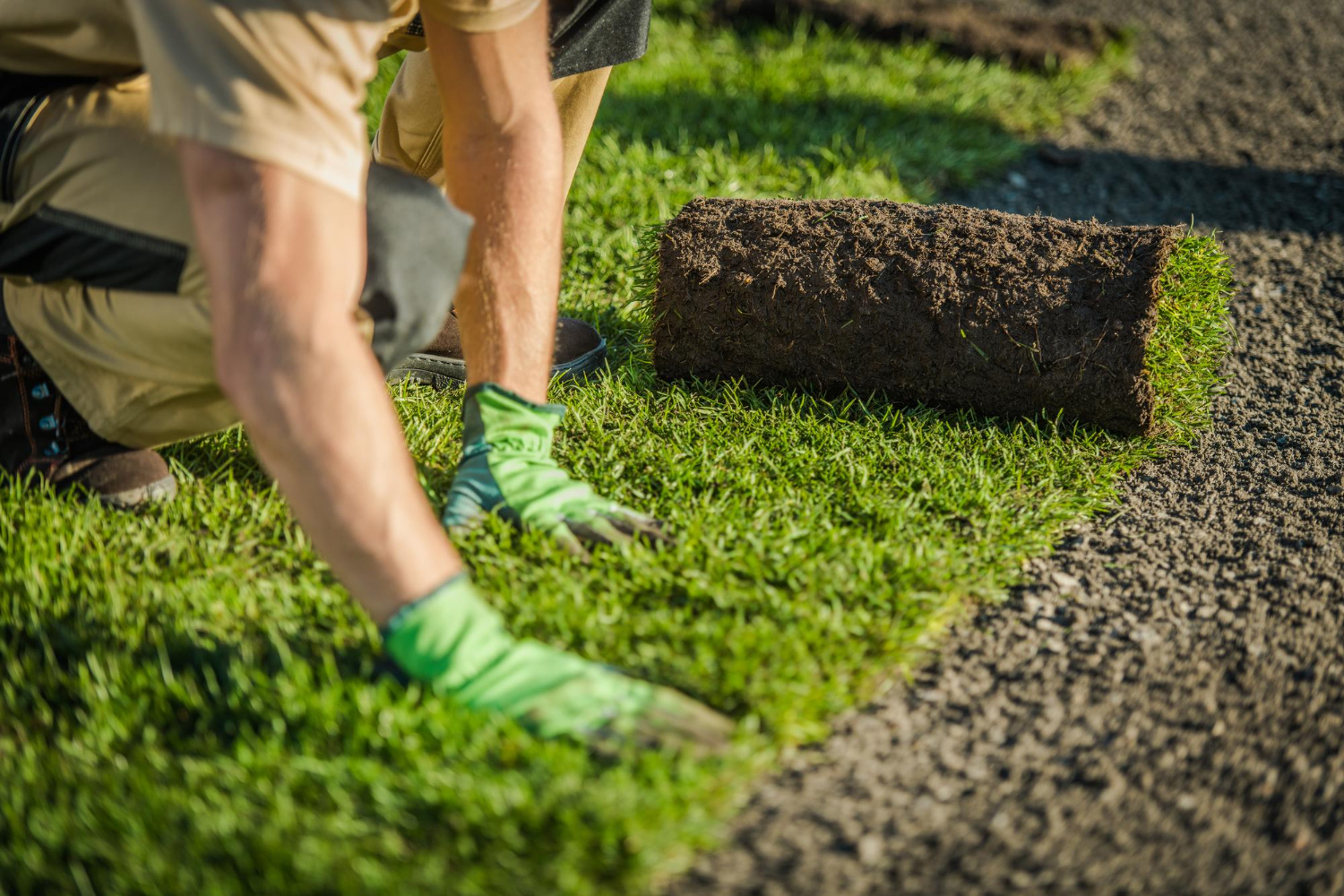
On installation day, the prepared surface should be ready before the sod arrives. Sod is placed carefully across the prepared soil and should be installed promptly to help protect it from drying out before it can establish.
- The first row is positioned along a straight edge, such as a walkway or driveway.
- Additional rows are staggered to prevent continuous seams.
- Pieces are trimmed carefully around trees, beds, and other landscape features.
- The sod is pressed or rolled to create good contact with the soil below.
- Watering begins after installation to keep the new turf and underlying soil properly moist.
Proper placement and soil contact are important for helping the sod establish evenly. Gaps between pieces or loose sections can allow the edges to dry out and may leave visible seams across the lawn as it begins to root.
Step 5: Watering and Aftercare
New sod has no root system in the ground yet, so it depends on you for moisture until it knits into the soil. The first stretch is the most demanding, and it is not a schedule you can skip because of a busy week.
- Keep the sod consistently moist, watering more often in hot, dry, or windy weather.
- Water deeply enough that moisture reaches the soil under the turf, not just the surface.
- Stay off the lawn as much as possible, and keep pets and heavy equipment off it.
- Hold off on mowing until the sod is rooted well enough that it will not lift when you tug a corner.
- Do not fertilize on your own schedule. Ask the installer what the new lawn needs and when.
Rooting takes time, and how much time depends on temperature, watering, and how well the sod was installed. Poor watering is behind many of the problems homeowners run into during that stretch.
DIY or Hire a Professional?
Whether to install sod yourself or hire a professional often depends on the size and condition of the lawn. Small areas with minimal preparation may be manageable as a DIY project. However, larger lawn renovations can involve several steps that require more time, equipment, and planning.
A full lawn renovation may involve removing existing vegetation, preparing the soil, grading the property, addressing drainage issues, and installing the new sod. Professional preparation can help ensure these steps are handled properly and the new lawn has a suitable foundation for healthy growth.
What Drives the Cost of Sod Installation in Richmond
There is no single price for sod installation in Richmond because every property has different preparation and installation requirements. The total cost depends on the size of the lawn, condition of the existing ground, amount of soil preparation needed, and whether grading or drainage work is required before the sod can be installed.
| Cost factor | Why it moves the number |
|---|---|
| Square footage | Larger areas require more sod, materials, and installation time. |
| Site prep | Removing existing grass, weeds, or debris adds preparation work. |
| Grading and soil | Uneven ground or poor soil may require additional preparation. |
| Site access | Sloped or difficult-to-access areas can make installation more involved. |
| Sod variety | Different turf varieties may have different availability and requirements. |
| Drainage work | Addressing standing water or drainage issues adds work before installation. |
When requesting an estimate, ask for the scope of work to be clearly explained. This should include the area being covered, site preparation, soil work, grading, drainage needs, installation, and cleanup. Understanding what is included makes it easier to compare estimates and know what to expect from the project.
How Long the Project Takes
Laying sod can move quickly once the ground is ready, but preparation often takes more time. A straightforward yard with a level surface and minimal preparation may be completed quickly. A property with an existing lawn to remove, uneven areas to correct, soil to prepare, or drainage issues to address will require additional work before installation.
The project timeline depends on the size and condition of the property and the amount of preparation required. Ask for the installation process to be explained in advance, including preparation, grading, sod installation, and initial watering, so you know what to expect from each stage.
Checking a Contractor Before You Hire
Virginia has no shortage of lawn and landscape providers. The Better Business Bureau maintains a directory of sod installation providers in Virginia, searchable by service area and distance, which is a reasonable starting point for a shortlist.
From there, verify a few basics:
- Confirm the company is licensed and insured, and ask for proof rather than accepting a verbal yes.
- Ask whether the work will be done by the company or subcontracted out.
- Request references from projects in your part of the metro area.
- Get the estimate in writing, including what is excluded.
Coverage for sod installation and related grading and lawn renovation work reaches Richmond, Chesterfield, New Kent, and the surrounding counties, so most homeowners in the metro have several options within a short drive. Altizer Lawn & Landscape is a family-owned, licensed and insured company serving Richmond, Mechanicsville, Hanover, Henrico, and Richmond City, and it offers free estimates on lawn, hardscaping, and drainage work.
Mistakes That Ruin New Sod
- Laying sod on unprepared ground and expecting roots to sort it out.
- Skipping the roller, which leaves air pockets under the turf.
- Letting pallets sit in the sun for a day or more before installation.
- Underwatering during the first stretch, especially in hot weather.
- Mowing too early or cutting too short once growth starts.
- Ignoring a drainage problem and then blaming the sod when it dies.
Frequently Asked Questions
How long does new sod take to root?
Sod begins establishing after it is installed and watered, but the rooting time can vary depending on temperature, moisture, soil conditions, and installation quality. Keep the new lawn consistently watered during the initial establishment period and avoid heavy foot traffic until the roots have taken hold.
Can I install sod myself?
Small patches may be manageable as a DIY project when only limited preparation is needed. Full lawn renovations can be more involved because they may require removing existing vegetation, preparing the soil, grading the property, and addressing drainage issues. Larger projects often require additional equipment and preparation.
How much does sod installation cost in Richmond?
Cost depends on several factors, including lawn size, site preparation, soil conditions, grading, site access, sod selection, and drainage work. Properties that need extensive preparation will generally require more work than lawns with an already suitable surface. Request a detailed estimate that explains the work included in the project.
Do I need to remove my old lawn first?
The existing lawn usually needs to be removed or properly prepared before new sod is installed. Leaving thick grass, weeds, or uneven vegetation underneath can interfere with the new turf and create an uneven surface. The appropriate preparation method depends on the condition of the existing lawn and soil.
What time of year is best for sod installation?
Sod can be installed during much of the year in central Virginia, but moderate temperatures and adequate moisture can make establishment easier. Warmer periods may require more frequent watering, while cooler conditions can affect how quickly the roots develop. Proper preparation and aftercare remain important regardless of the installation season.