
Richmond sits in a transition zone, which means grass that thrives farther north and grass that thrives farther south both run into limits here. Add heavy shade in older neighborhoods, compacted soil in newer construction yards, and a growing season that shifts from year to year, and the sod versus seed question stops being simple. Both options can produce a thick, healthy lawn. They just get there on different timelines and different budgets, and the right call depends on your yard, your schedule, and how long you are willing to look at bare ground.
This comparison sticks to what actually matters for Richmond area properties: upfront cost, labor, establishment speed, planting windows, and how each option handles the specific problems local homeowners deal with, from muddy shade to sloped bare dirt.
Why Richmond Lawns Are a Little Complicated
Many Richmond area properties fall in USDA zone 7b, and the region’s reputation as a challenging transition zone comes from the fact that neither northern cool-season grasses nor southern warm-season grasses have a perfect fit. Tall fescue is the common local answer. It performs best in full sun to moderate shade, and it is readily available as sod around the state, which matters a great deal when you are weighing your options. Availability shapes cost, timing, and how fast a project can get moving.
Shade is the other local wrinkle. Yards in Richmond’s older, tree-heavy neighborhoods frequently struggle with thin turf or straight mud, and homeowners in that situation often turn to fall overseeding in shaded areas rather than tearing out everything and starting over. That context matters because the sod versus seed decision is rarely made on a clean, empty lot. It is usually made on a lawn that already has problems.
The Case for Seed
The clearest advantage of seeding is upfront cost. Premium grass seed costs much less than sod for the same size lawn, and seeding carries a low labor investment compared with handling rolls of turf. If you are working with a fixed budget or a large area, seed stretches considerably further and leaves room in the budget for soil amendments or drainage fixes.
Germination depends on soil temperature. Once soil temperature is consistently above 55 degrees, the seed should germinate. Getting seed into contact with soil is the other half of the equation, and slice seeding improves that seed-to-soil contact by opening the surface instead of leaving seed sitting on top of thatch. For tall fescue, germination is fairly quick at roughly 10 to 14 days, though a lawn thick enough to walk on takes considerably longer than that.
The Case for Sod
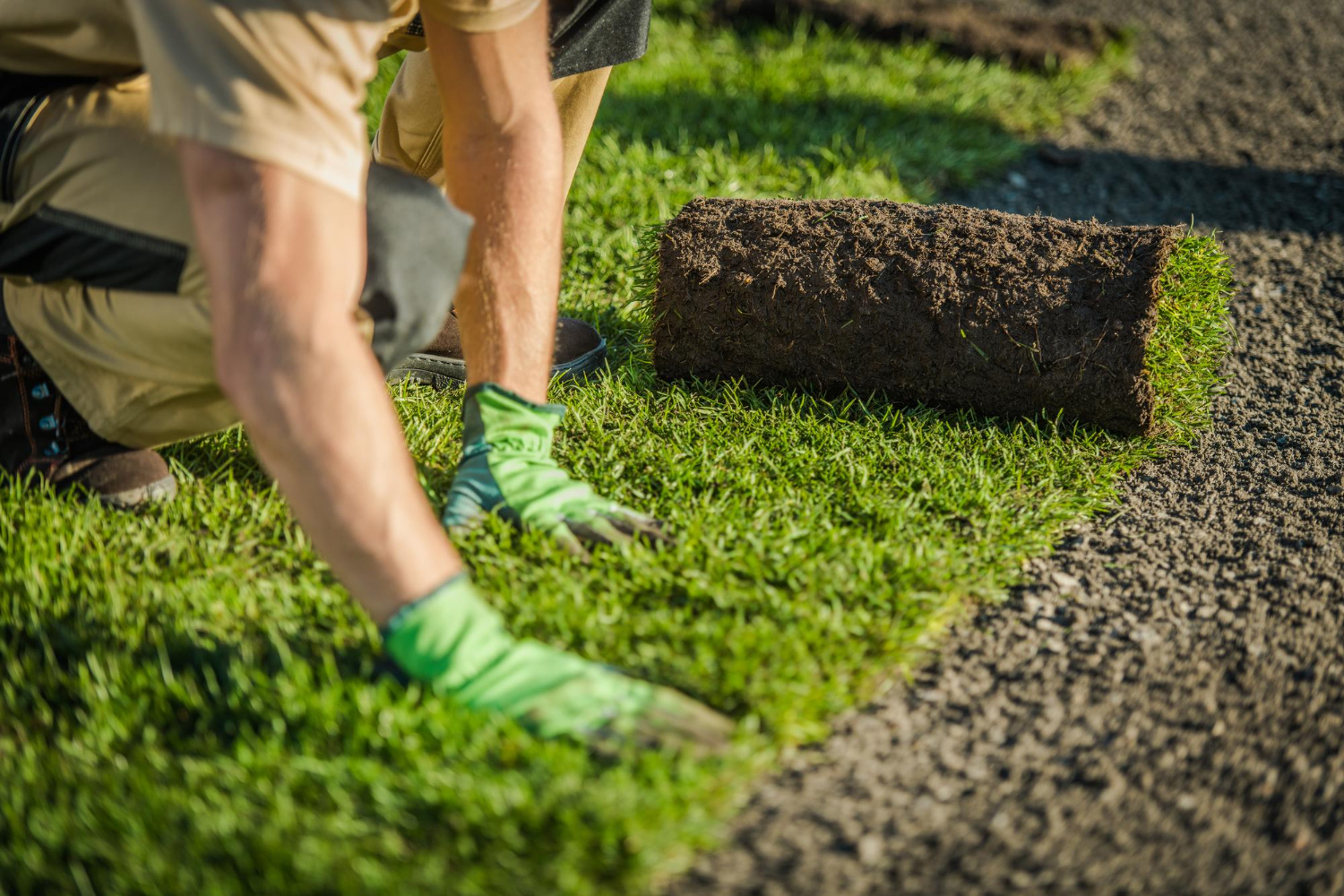
Sod arrives as established turf. On a slope, in a bare patch, or in a front yard that needs to look finished, that immediate coverage is the entire point. There is no waiting on germination and no window where a hard rain can wash seed off freshly graded ground.
The tradeoff is cost. Sod for the same size lawn runs higher than premium seed, and it needs consistent water during the root knitting period while it ties into the soil below. Tall fescue is readily available as sod around Virginia, which makes it the practical choice for most Richmond installations, and it handles full sun to moderate shade once established.
Sod vs. Seed at a Glance
| Factor | Grass Seed | Sod |
|---|---|---|
| Upfront cost | Lower. Premium seed costs much less than sod for the same size lawn. | Higher for the same square footage. |
| Labor at installation | Low labor investment. Slice seeding improves seed-to-soil contact. | More material to handle, place, and water in. |
| Time to visible coverage | Tall fescue germinates in about 10 to 14 days; a finished lawn takes longer. | Established turf on day one. |
| Planting window | Cool-season grass: early fall (late September to mid-October) or spring (late March to early May). | Depends on supplier scheduling and soil conditions; confirm timing with your installer. |
| Availability around Richmond | Widely sold. Tall fescue is a common local selection. | Tall fescue is readily available as sod around the state. |
| Shade performance | Same species limits apply. | Same species limits apply. |
Timing: Working With Virginia’s Planting Windows
For cool-season grasses, the strongest seeding window in Virginia is early fall, roughly late September to mid-October. A spring planting window runs from late March to early May. Fall gets the edge for most homeowners because soil is still warm from summer while air temperatures are dropping, which supports germination and root growth without the stress of summer heat.
Soil temperature is the practical trigger for seed. Once it holds consistently above 55 degrees, germination should begin. Checking with a soil thermometer beats guessing from the calendar, especially in a year with an unusual spring or a slow warm-up. The same general growing conditions that favor seed also favor sod establishment, which is why fall and spring tend to be the busy seasons for both approaches.
Shade, Slopes, and Bare Dirt
Shaded Richmond yards often end up as mud by late summer, and homeowners reasonably want something green in place before winter. The species matters more than the delivery method here. Tall fescue performs best in full sun to moderate shade, so a deeply shaded yard is a tough assignment whether you lay sod or spread seed. Thinning tree canopy, adjusting mowing height, or accepting a thinner lawn may all be part of the realistic answer.
Slopes are a different problem. Seed on a slope is vulnerable to runoff before it ever germinates, and maintaining good seed-to-soil contact on an incline is difficult. Sod gives you immediate cover and holds the surface right away, which is why sloped or highly visible areas are where the higher price tag often earns its keep. On flatter ground, slice seeding does an excellent job of improving contact, and seed becomes the more economical path.
Cost and Labor: Where the Two Paths Diverge
Seed wins on both entry cost and effort. Premium grass seed is much less expensive than sod for the same area, and seeding involves a low labor investment. For a large, flat, sunny property, that combination is hard to beat, and it leaves budget room for the soil preparation that makes or breaks the result.
Sod wins on speed and stability. You pay more per square foot and you handle more material, but you skip the germination window entirely. For a small front yard, a slope, an area with erosion risk, or a homeowner who needs the lawn finished before an event or a listing date, the premium buys something real. The mistake is treating the choice as a personality test. It is a math problem built from square footage, patience, and how much of the lawn is visible to the street.

Which Option Fits Your Situation?
Seed tends to make sense when:
- The planting area is large and the budget is a priority, since seed costs much less than sod for the same square footage.
- The ground is relatively flat, where slice seeding can improve seed-to-soil contact evenly.
- You can plant in the fall window from late September to mid-October, or the spring window from late March to early May.
- You are overseeding an existing thin lawn rather than starting from nothing.
Sod tends to make sense when:
- The area is sloped or has erosion risk and you need cover in place immediately.
- The lawn is small, highly visible, or tied to a deadline.
- You want established tall fescue rather than waiting through germination and seedling growth.
- You are willing to water consistently during the establishment period.
Preparing the Ground Matters More Than the Choice
Neither sod nor seed performs well on compacted, poorly drained soil. If water pools in the yard after a storm, or if the surface has been scraped and graded without any thought to where runoff goes, planting first and diagnosing later is backwards. Altizer Lawn & Landscape handles drainage work such as French drains and grading, and those fixes are often the difference between a lawn that finally takes and one that fails twice in the same spot.
Compaction is the quieter issue. Heavy clay that has been driven over during construction does not give roots anywhere to go, and seed spread on top of it will germinate and then stall. Loosening the surface, adding organic matter, and correcting the grade before you plant gives both options a fair shot at succeeding.
Getting Local Help With Your Richmond Lawn
Altizer Lawn & Landscape is a family-owned, licensed, and insured landscaping company serving Richmond, Mechanicsville, Hanover, Henrico, and Richmond City. The company’s services include lawn care and maintenance such as mowing, fertilization, aeration, and overseeding, along with drainage solutions, hardscaping, gravel driveways, and excavation and grading. Service is owner-led, and estimates are free, so you can get a straight assessment of whether your yard is a seed project or a sod project before you spend money on either one.
If you are weighing sod versus seed on a specific property, the fastest way to a real answer is a site visit. Shade patterns, slope, soil condition, and drainage all change the math, and none of them show up in a photo.
Frequently Asked Questions
Is it cheaper to buy sod or seed?
Seed is the lower-cost route. Premium grass seed costs much less than sod for the same size lawn, and seeding involves a low labor investment compared with laying rolls of turf. Sod’s higher price buys immediate coverage and a root system that is already in place, which is why it is often chosen for small, high-visibility areas and slopes instead of large open yards.
What is the best grass type for a Richmond, VA lawn?
Tall fescue is the practical standard across much of the Richmond area. It germinates in about 10 to 14 days, performs best in full sun to moderate shade, and is readily available as sod around Virginia. Because Richmond sits in a transition zone, results still vary from yard to yard. Confirm your specific grass selection with a local supplier or Virginia Cooperative Extension before you buy.
When should I plant grass seed in Virginia?
For cool-season grasses, the fall window is early, roughly late September to mid-October, and the spring window runs from late March to early May. Soil temperature is the practical trigger: once it stays consistently above 55 degrees, the seed should germinate. Fall planting typically lines up better with cooling air temperatures, which is why so many Richmond homeowners overseed in the fall.
How long does tall fescue take to germinate?
Tall fescue germinates quickly, typically in about 10 to 14 days. Germination is not the same as a finished lawn, though. Seedlings still need time to thicken and fill in before the turf can handle normal foot traffic, and they need steady moisture through that entire period. Expect a sparse, uneven look for a while after the first green shoots appear.
Can sod or seed fix a shady Richmond yard?
Shade limits both options, because the grass species still has to match the light level. Tall fescue performs best in full sun to moderate shade, so heavily shaded yards often stay thin no matter how the grass is delivered. Many local homeowners fall back on fall overseeding in shaded areas, or address the shade itself by thinning tree canopy and adjusting how the lawn is maintained.